Licensed New York contractorsPhones answered 24/7(315) 640-3590
$100 off your first job, credited by us. Terms apply.

the Bronx and the lower Westchester towns along its northern edge

Water Damage Drying in the Bronx and Lower Westchester

Get the building dry inside the window where wet material is still just wet material, before a water problem turns into a licensed mold project.

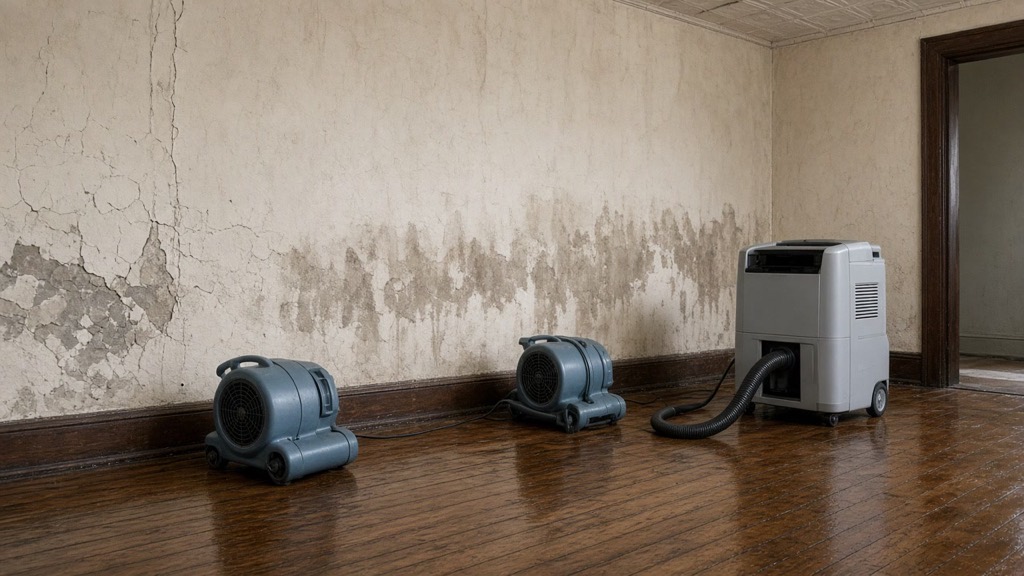
Blue air movers and industrial dehumidifier drying a room with peeling plaster and moisture banding
10 sq ftWhere New York licensing takes over
2 companiesIndependent licensed parties the law requires above that line
20,424Mold violations city inspectors wrote in the Bronx in 2024
Get In Touch

Water Damage Drying quote

Tell us when the water came in, where it came from, and whether anything is still wet. Those three answers decide whether this is a dry out or already a mold project.

Would you rather talk it through? Call (315) 640-3590, answered 24/7.

$100credit

$100 off your first job

Credited by us on your first booked job.

  • One credit per customer per property, on your first booked job.
  • Valid through December 31, 2026.
Start Your Quote

Mention this offer when you book. Full terms.

Four quick questions, then your details. It takes about half a minute.

Question 1Who decides what happens at this property?

In New York City this is the first thing that has to be settled, because the duty to fix mold in an apartment building sits with the owner.

Question 2What are you looking at?
Question 3Is anything still wet?

This is the answer that decides how fast anyone needs to move.

Question 4How soon do you want someone there?
About the property

Who should we ask for?

How can we reach you?

We call to confirm the details before anyone is sent out.

Where is the property?

The contractor match is by property, not by person, so the street line matters.

Anything else we should know?

Your $100 credit is attached to this request. Mention this offer when you book. See terms.

Your details are used only to respond to this request and arrange the service.

Overview

What a dry out covers, and why the window is short

Drying is the work that follows a riser letting go, a cellar taking water off the street, or a backed up drain putting an inch across a floor. Extract the standing water, pull the moisture back out of the structure with air movers and dehumidifiers, and keep reading the material until it is genuinely dry rather than dry to the touch. The reason it is urgent is a number: the EPA states that wet or damp material dried within 24 to 48 hours of a leak or spill will in most cases not grow mold. Inside that window this is a drying job. Outside it, the same water needs a licensed assessor and a separate licensed remediator, and costs a multiple of what drying would have.

  • Extraction of standing water from floors, cellars and below grade storage
  • Air movers and dehumidifiers sized to the room and run until the material reads dry
  • Moisture readings logged across days rather than a single reading on day one
  • Drying inside wall cavities and under floors without opening a whole room where that can be avoided
  • Controlled removal of material that is past saving, such as soaked insulation and carpet pad
  • A documented record of the readings for an insurer, a board or a managing agent
  • An honest handover to assessment where growth has already started
Air scrubber and debris bags beside a peeling mold-stained wall
Assessment

What decides how long a dry out takes in this housing stock

Drying time comes down to how much water went where, and what it went into. Two of these catch people out in the Bronx and lower Westchester more than anywhere else.

How long it has been wet

The EPA puts the line at 24 to 48 hours from the leak or spill. Inside it, this is drying. Outside it, growth has usually started and New York's two licensee rule takes over, which is a different job with a different price.

Where the water came from

Clean supply water, rain off a street and water backing up through a basement fixture are three different jobs. The city's own Ida review records Bronx cellars filling from street runoff, from overtopped rivers and streams, and from water rising back through basement plumbing as it sought its own level.

What got wet

Masonry and plaster hold water and give it up slowly. A solid brick wall in a 1930s building behaves like a reservoir rather than a surface, and it will keep a room damp long after the floor looks finished.

Below grade or above it

A cellar slab and foundation wall sit near ground temperature all summer. The July dew point at the nearest station averages 63.1 degrees and never drops below 60.3 at any hour, so opening the windows to air a cool cellar can put more water on the walls than it takes away.

Whether the flood came from the building or from the sky

Ida produced a peak of 3.15 inches of rainfall an hour against a sewer system built for 1.5 to 2. Only 6.9 percent of the New York City buildings it damaged were inside the 100 year floodplain, so being off the flood map is not evidence that it will not happen again.

Access and power

Air movers and dehumidifiers need circuits and floor space. A tight cellar on one outlet dries slower than a garden level with two, and that shows up in days rather than hours.

Whether anyone is living in it

Occupied apartments mean quieter equipment, longer runtimes and notice to the people who have to sleep next to it.

Next Step

Still wet, or wet last week

The answer changes which trade you need and what it costs. Give us the date and we will tell you which one you are looking at.

Process

How a dry out runs from the day the water stops

  1. Stop the water, then map it

    Nothing dries under a running leak. Once it is stopped, the first job is finding how far the water traveled, which is reliably further than the stain suggests.

  2. Extract what is standing

    Pumped or vacuumed out before any air is moved. Evaporating standing water does not remove it, it relocates it into the walls and the ceiling below.

  3. Set equipment for the room, not for the invoice

    Air movers to break the boundary layer at the surface, dehumidifiers sized to the volume and the material, and the windows shut. Opening up a cellar on a humid day is the most common way a dry out goes backwards here.

  4. Read the material every day

    Meters into the plaster, the framing and the slab. Dry to the touch is not dry, and a floor can read damp for a week after the surface looks perfect.

  5. Take out what will not come back

    Soaked insulation, carpet pad and saturated porous material are removed rather than dried in place, because they hold water long enough to start something.

  6. Call it, and say plainly if it has become a mold job

    If growth has started, the drying contractor is not the party that scopes it. An independent licensed assessor writes the plan and a separate licensed remediator carries it out.

Recent Work

Water Damage Drying work we have arranged

Draft placeholder for work-water-damage-drying-01. Replace with a real description.
In The Field

What water damage drying looks like

Scope

Where a dry out starts and stops

When you may not need this at all

  • A small clean water spill caught the same afternoon on a hard floor is usually a mop, a fan and an open interior door.
  • If water is still coming in, the plumber, the roofer or the city comes before anyone dries anything.
  • If growth is already visible over about ten square feet, drying alone is the wrong purchase. That is a licensed assessment followed by a licensed remediation.
  • If you rent, the repair is the owner's, and in a building of three or more apartments inside the city the mold duty that follows is statutory.
  • A cellar that is damp with no event behind it is usually condensation rather than a leak, and the answer is humidity control rather than a dry out.

What is out of scope

  • Fixing the plumbing, the roof, the pointing or the drain. We arrange the drying; the repair is its own trade.
  • Mold assessment and mold remediation, which are separately licensed in New York and cannot both come from one company.
  • Sewage cleanup beyond what a drying contractor is equipped and permitted to handle.
  • Filing, negotiating or interpreting an insurance claim.
  • Backwater valves, sump systems and drainage design, which are planned work rather than emergency work.
  • Contents restoration, document drying and electronics.
Phones answered 24/7Talk to a person about what is in front of you right now.
Licensed New York contractorsMatched to the license the job needs, on either side of the city line.
Your assessor is never your remediatorState law forbids one company from doing both, and we keep the two genuinely apart.
Questions

Questions people ask when the water has just stopped

How fast does this have to happen?

The EPA's guidance is that wet or damp material dried within 24 to 48 hours of a leak or spill will in most cases not grow mold, so that is the window worth chasing. We do not promise an arrival time and nobody honest promises one before seeing the job.

My cellar floods in heavy rain. Is that a flood zone problem?

Often it is not. Only 6.9 percent of the New York City buildings damaged by Ida sat in the 100 year floodplain, and the city names the Bronx as the borough where cellars filled from overtopped rivers and streams. Throgs Neck's ZIP code accounts for 1,184 of the 1,945 flood insurance claims ever filed in the whole borough, while Fordham has recorded three.

Should I open the windows to dry it out?

In summer, no. The July dew point nearby averages 63.1 degrees around the clock, so warm outdoor air meeting a cool cellar wall deposits water on it. Closed up with a dehumidifier running is both faster and cheaper.

Will my insurance cover it?

That is between you and your policy, and we do not interpret coverage or bill anyone on your behalf. What helps in either direction is a logged set of moisture readings and photographs from the first day, which a drying contractor can produce as a matter of routine.

It dried out on its own. Am I finished?

Possibly. If it was dry within a couple of days and nothing smells musty, probably yes. If it stayed wet for a week, assume something started behind the finish and have it looked at before you close the wall up.

Next Step

Tell us when the water came in

Phones are answered 24/7, and there is no obligation in finding out where you stand.

Start Your QuoteCall (315) 640-3590
Start Your Quote