Mold help across the Bronx, from the basement up
Whether you own a two-family house on a quiet block or manage a large apartment building, we connect you with the New York companies that each stage of a mold job calls for.
Which side of the city line
Inside New York City: the Bronx
Housing inspectors score a mold violation by the size of the patch, and every class carries its own deadline. The city also bars an owner, a managing agent and their staff from doing mold work over ten square feet in a building with ten or more apartments, so a state-licensed firm has to.
Past the line: Yonkers, Mount Vernon, Pelham, New Rochelle
Common questions
Does this page cover every Bronx ZIP code?
Yes. It applies to the whole borough. The neighborhood pages for Riverdale, Pelham Bay, Throgs Neck, Fordham, Mott Haven, Morris Park and Kingsbridge add detail where the buildings differ.
Whose job is mold in a Bronx building with several apartments?
The owner of a building with three or more apartments must keep tenants' homes free of mold, and Housing Preservation and Development enforces that duty. Tenants are told to notify the landlord first and complain to the city if nothing is fixed.
My building is in Yonkers or Mount Vernon. Is this the right page?
No. Those cities sit outside New York City, so the city's housing rules and filings do not reach them. Use the page for your own city or village instead.
The four jobs in the Bronx
Pick the job that matches what is happening in your building. Each page below gives the borough picture for that job, and the neighborhood pages go closer.
Local notes for the Bronx
The Bronx records more mold violations than any other borough. City inspectors recorded about 20,400 mold violations here in 2024, against about 13,600 in Brooklyn, the next highest.
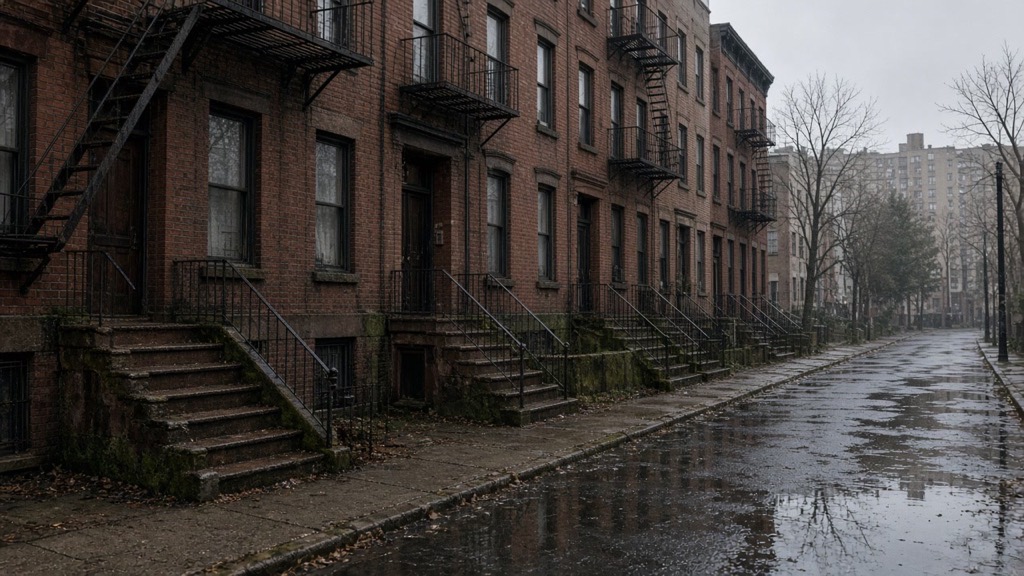
The building mix explains much of that. Roughly four in five occupied homes are rented, and seven in ten units are in buildings of five or more apartments, so one failed riser or roof membrane becomes several households' problem and a single owner's legal duty. Water also arrives without a flood zone: only 1.3 percent of Bronx residents and homes sit inside the mapped floodplain, yet the city's review of Hurricane Ida shows basements taking in water from street runoff, from rivers spilling over, and from basement plumbing fixtures that let it back up.
Every Bronx address sits inside the city line, which means New York City's housing rules and city paperwork apply to the job. Buildings just across the northern edge, in Yonkers, Mount Vernon, Pelham and New Rochelle, follow their own local building departments instead, and this borough page does not apply to them.
- Median year built
- 1955
- Old buildings
- 33.3 percent of housing units built in 1939 or earlier (Bronx County)
- Renters
- 79.9 percent of occupied units are renter occupied (Bronx County)
- Larger buildings
- 71.5 percent of units are in buildings of five or more units (Bronx County)
Source: American Community Survey 2020 to 2024 5-year estimates, US Census Bureau
Who handles it here
In the Bronx the owner of a building with three or more apartments must keep tenants' homes free of mold and the city's Housing Preservation and Development department enforces it, and in a building with ten or more apartments work over ten square feet must go to separately licensed assessors and remediators with the city Department of Environmental Protection receiving the filings. Source: New York City Department of Housing Preservation and Development, Local Law 61 of 2018, The City of New York
What makes buildings wet
Only 1.3 percent of Bronx residents live inside the 1 percent annual chance floodplain, yet the city's review of Hurricane Ida records Bronx basements taking water from street runoff, from overtopped rivers and streams and back up through plumbing fixtures, mostly outside the mapped floodplain citywide. Source: New York City Emergency Management, New York City Hazard Mitigation Plan, The New Normal: Combatting Storm-Related Extreme Weather in New York City, City of New York, Community Development Block Grant Disaster Recovery, City of New York