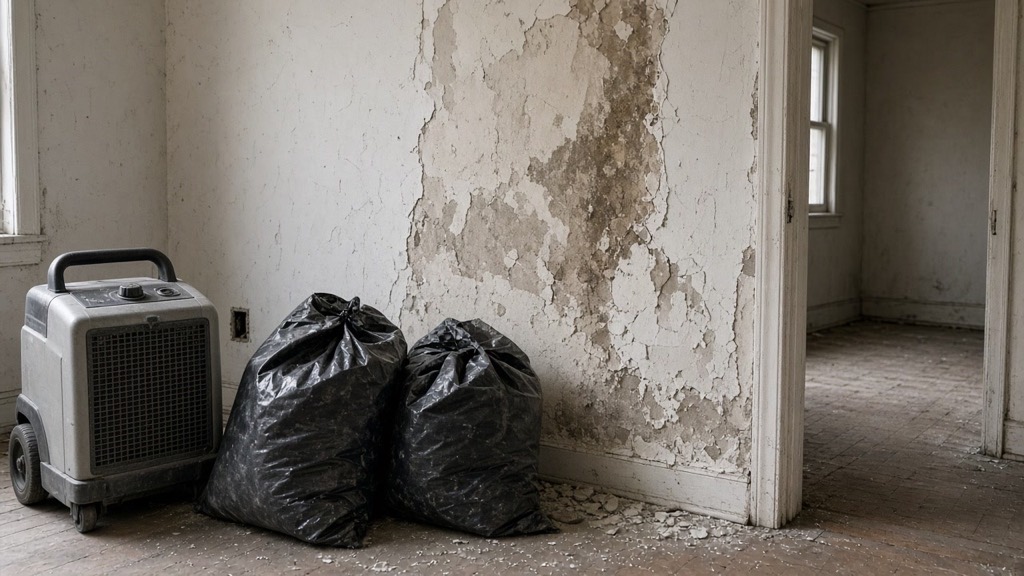
Four mold jobs for Bronx buildings, chosen by what you can see
Start with what is in front of you, not with a trade name. Each job below leads to a page that explains the work, the rule behind it and what to send us.
What are you looking at?
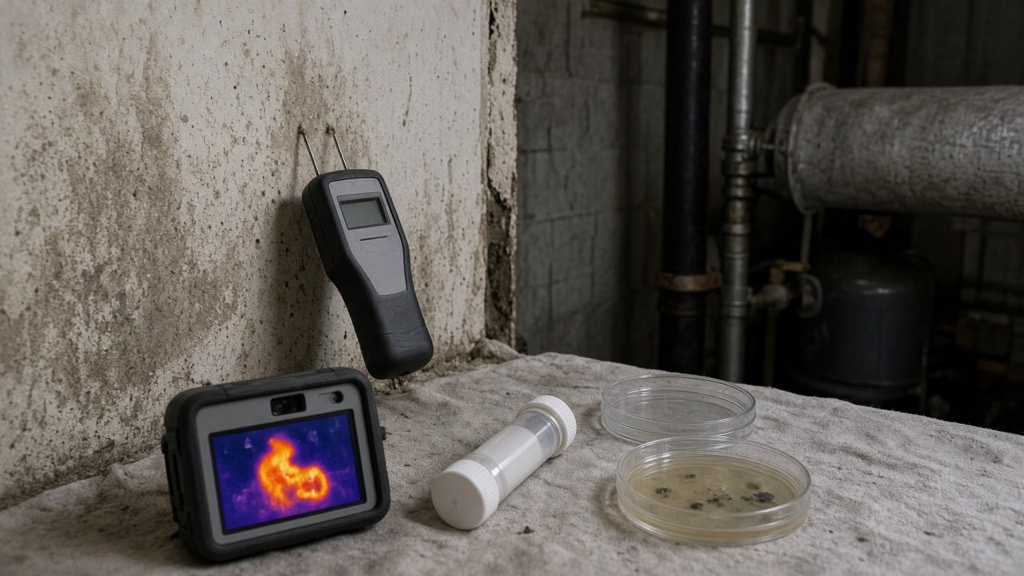
- A stain, a smell or a wall that keeps coming backNobody knows the source yet. A survey looks for the water and writes down the plan.Mold Survey
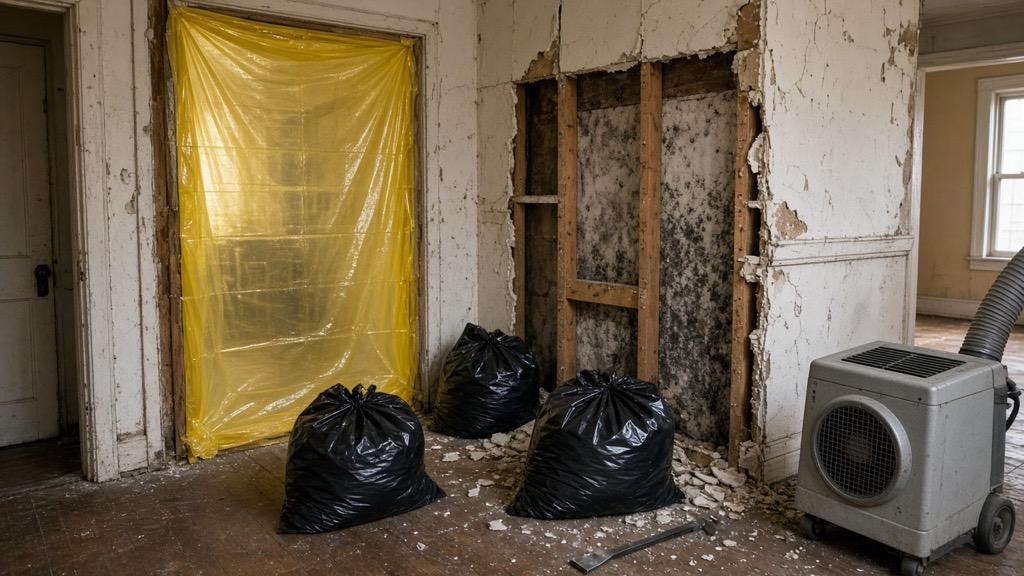
- A plan in hand and mold to be cleanedYou have the assessor's document and need a separate licensed firm to carry it out.Mold Cleanup
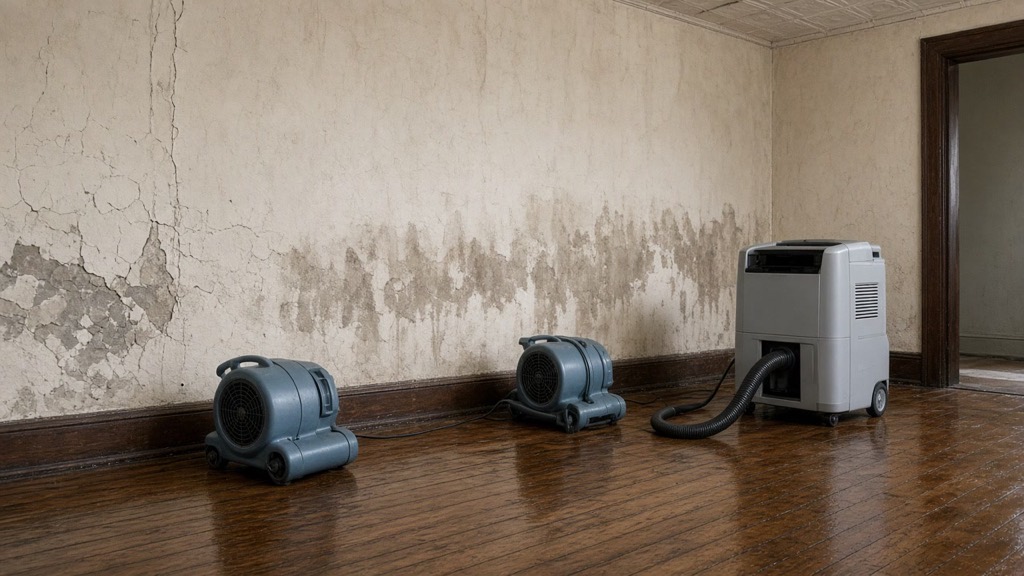
- Water on the floor, in the cellar or through the ceilingThe building is wet now. Drying comes before anything is cut out.Dry-Out
- A violation or a notice with a date on itThe city or a town office wants it corrected and you manage the building.Violation Help
Common questions
Which of the four jobs do I book first?
Book for the thing in front of you. Water on the floor points to drying. A stain with no obvious cause points to an assessment. A notice with a date on it points to violation help. Cleanup comes after the written plan, not before it.
Do I need all four jobs on every property?
No. A property may need only one or two. The strict order of assessor, then remediator, then clearance applies once the affected area passes ten square feet, and a smaller patch can follow a simpler path.
Why do the service pages show no price list?
New York's labor department says a remediation cost estimate should wait until the independent assessment is done, and the contractor, not this site, sets the price. Any figure quoted earlier is a guess.
Does sending the form commit me to anything?
No. The form asks for your contact details and the building's address so the right first step can be arranged, and you decide whether to go ahead. Your first booked job carries the $100 credit described in the terms.
The four jobs
Independent Mold Survey and Written Plan
An independent assessor writes the plan the cleanup follows and, where possible, names the moisture behind Bronx mold. $100 off your first job.
Mold Cleanup Done to a Written Plan
Bronx mold cleanup follows an assessor's plan and ends with written clearance. Over ten square feet, the hired firm must hold a state license. $100 off.
Dry-Out Before Mold Sets In
A soaked Bronx building needs drying before mold has time to start. We connect you with drying firms. $100 off your first booked job.
Mold Violation Help for Owners and Managers
Got an HPD mold violation in the Bronx or a local code notice in Westchester? We connect owners and managers with the firms the correction needs. $100 off.
Three steps
Describe it
Send the address, the room and what you see.
Get pointed to the right rung
An assessor, a drying firm or a remediator, in the order the law sets.
Book with the company directly
You agree scope and price with them, and the $100 comes off your first booked job.
What shapes the cost, and your $100 off
Cost drivers
- The size and number of rooms involved
- Square footage and the number of rooms in the plan
- How many rooms and how much material is wet
- The violation class and the area it names
More on these jobs
Why the jobs come in a set order
On any hired job over ten square feet, New York puts the assessor and the remediator in separate companies, which is why this page offers no single bundled price. It also explains why drying and violation help sit beside the other two: they feed into the same sequence.
Not sure which tile fits?
Choose the closest one and say more in the form. Wet right now means dry-out first. Mold with no source means the survey. A paper with a deadline means violation help. Our two-company guide shows how they link.