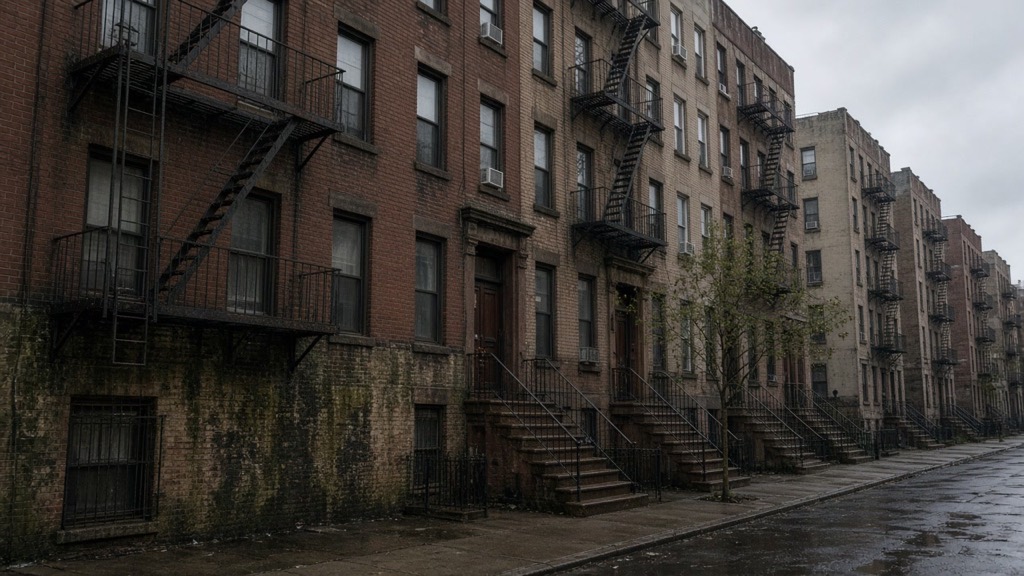
Mold removal in the Bronx, in the order the law sets
A Bronx mold job goes right when an independent assessor writes the plan, a different licensed firm follows it, and the assessor issues a written clearance report when the cleanup has succeeded. We connect you with those companies on whichever side of the city line your building sits.
- No obligationA request here commits you to nothing. The $100 credit waits for a first job you decide to book.
- Both licenses explainedOn a mold job over ten square feet, state law keeps the assessor and the remediator as separate companies, unless an exemption such as an owner working on their own home applies. We tell you which license to ask each one for.
- $100 off your first jobCredited by us on the first booked job, one per customer per property. The terms are short and public.
- An introduction, not the contractorWe do not set prices or do the work. The companies you meet agree scope, price and timetable with you directly.
Which side of the city line is your building on?
The Bronx and Yonkers share a border but not the same city rules on mold.
Pick the panel that matches your address. The Bronx sits under the city housing code on top of state law. Yonkers, Mount Vernon, Pelham and New Rochelle sit under state law and their own building departments.
Inside New York City: the Bronx
Housing inspectors score a mold violation by the size of the patch, and every class carries its own deadline. The city also bars an owner, a managing agent and their staff from doing mold work over ten square feet in a building with ten or more apartments, so a state-licensed firm has to.
Past the line: Yonkers, Mount Vernon, Pelham, New Rochelle
The ten-unit bar is a city law, so it stops at the line. Each of these places has its own building department, and the state's two-license rule still applies over ten square feet. Section 933's exemptions still apply here, among them an owner working on their own home, and an owner or managing agent using full-time staff on a building of more than four units, unless they do mold work for the public.
Where this comes from
Source: New York City Department of Housing Preservation and Development, Local Law 61 of 2018, The City of New York, published by NYC HPD), The City of New York (Local Law 61 of 2018, Westchester County Department of Consumer Protection, New York State Senate, New York City Department of Health and Mental Hygiene
Four jobs, one floor directory
Find the floor where your problem lives and ring that bell.
- Independent Mold Survey and Written PlanStains, a smell nobody can place, or a wall that keeps coming back damp. An assessor looks for the water and writes down what has to happen.Open
- Mold Cleanup Done to a Written PlanYou hold an assessor's plan and need a licensed firm to carry it out, then a written clearance at the end.Open
- Dry-Out Before Mold Sets InA pipe, a roof, a washing machine or a flooded cellar has soaked the building. The EPA puts the drying window for wet materials at 24 to 48 hours.Open
- Mold Violation Help for Owners and ManagersAn HPD mold violation in the Bronx, or a building department notice in Westchester, has put a date on your calendar.Open
Questions Bronx owners and tenants ask first
Short answers, with the next step when there is one.
My landlord says it is only condensation. Is that the end of it?
In New York City that answer does not close the matter. The city health department says the owner of a building with three or more apartments, or of any building housing a tenant with a diagnosis of moderate or severe persistent asthma, must keep tenants' homes free of mold, including safely repairing the leak behind it. Outside the city, ask your local building department what applies. Write down what you see, send it to the owner in writing, and keep dates. If you want to understand the steps before you press the owner, send the form and say so.
Can I clean it myself?
The EPA treats a patch smaller than about three feet square, which is roughly ten square feet, as something a homeowner can usually clean without help. Over ten square feet New York treats the job as a mold project and the license rules apply unless an exemption fits. The sensible test is the tape measure, not the smell.
Why can I not get one price for assessing and cleaning together?
Because one company may not lawfully do both on the same property over ten square feet. The state labor department adds that a cleanup estimate should wait for the independent assessment, which keeps the assessor independent of the company that cleans.
I manage a building in Mount Vernon. Can my own maintenance staff do it?
State law may allow it. Section 933 of the Labor Law exempts an owner or managing agent, or their full-time employee, working on the owner's own residential building of more than four units, as long as they are not doing mold work for the public. New York City is stricter: in a Bronx building of ten or more apartments, mold work over ten square feet cannot be done by the owner, the agent or their staff.
Does the $100 credit come off the contractor's price?
No. We fund it ourselves and credit it on your first booked job, one per customer per property. The contractor's price stays whatever you and they agree. Read the short terms for the cutoff date and the exact conditions.
What if nothing is leaking but the wall is black in the corner?
Bronx summers hold enough moisture in the air to wet a cold wall without any leak. An assessor's job is to trace which of the two you have, because scrubbing a condensation problem does not last. Our guide on mold with no leak explains how to look.
What moves the price, and what the $100 does
The state labor department says a cleanup estimate should wait for the independent assessment. These are the things that will move the number once it exists.
Cost drivers
- How much is affected The area in square feet and how many rooms it spans set the scale of containment, labor and disposal.
- How far the moisture traveled Mold in a surface coat is a different job from mold in a wall cavity, under a floor or inside a ceiling.
- Whether the source is fixed A running leak or a failing roof has to be repaired before cleanup can mean anything, and that repair has its own cost.
- The building itself Occupied apartments, long stair carries, shared risers and the age of the walls all change how the work is staged.
- Filings inside the city In a Bronx building of ten or more apartments, notices and reports go to the city, and that paperwork sits inside the job.
Source: New York State Department of Labor, Local Law 61 of 2018, The City of New York
The three rungs of a licensed mold job
Over ten square feet, New York builds the job like a fire escape: nobody skips a landing.
An independent assessor writes the plan
A licensed assessor who will not do the cleanup traces the moisture where it can and writes the project plan: rooms, methods, quantities and the clearance criteria.
A licensed remediator does the work to that plan
A different licensed company carries out the cleanup and the repairs the plan calls for. It works from the assessor's document, not from its own guess at the scope.
The assessor checks and clears
When the cleanup is finished, the assessor carries out a post-remediation assessment and issues a written passed clearance report once the remediation has been successful.
Whose job is it, and what comes first
The answer changes with how you hold the building.
You own a house
The building is yours to arrange. The law lets a residential owner do mold work on their own property, but a written plan from an independent assessor tells you what is behind the wall before you spend anything. Over ten square feet, hire that assessor first and keep the cleanup firm separate.
You own or manage a rental building
Keeping units clear of mold is your duty, and in the Bronx it comes with annual unit checks for three or more apartments. In a Bronx building of ten or more apartments, mold over ten square feet is not work you or your staff may do yourselves, so book the licensed pair. Outside the city, check with the local building department first.
You rent your home
In a Bronx building of three or more apartments the owner, not you, has the duty to deal with it. Photograph the problem with dates, tell the owner in writing, and keep a copy. If the owner does not act, the city takes complaints online and by phone at 311. In Yonkers, Mount Vernon, Pelham or New Rochelle, start with your local building department. Send us the form if you want the order of steps and what to ask your landlord for.
You own a co-op or condo unit
Your proprietary lease or declaration decides which parts the board handles and which parts are yours. Walls, risers and roofs can be shared. Tell the board in writing before anyone is hired, then plan your own unit's work with an assessor.
Eight Bronx neighborhoods and four places over the line
Every building has its own water story. Start with the place that is closest to yours.
Inside the city
- The Bronx, borough widethe broadest view, from prewar walk-ups to river-edge houses.
- Riverdalefew flood claims, and a mix of big apartment buildings and houses.
- Pelham Baybay-front streets beside the city's largest park.
- Throgs Neckmostly one and two family buildings, and most of the borough's flood claims.
- Fordhamdense, old and heavily rented.
- Mott Havenmore homes reporting leaks than the city as a whole.
- Morris Parkolder apartment blocks and very few flood claims.
- Kingsbridgemostly buildings of ten or more apartments.
Read first, decide second
Five plain explainers, each ending with what to do next.
- The two-company ruleWhy the firm that finds the problem cannot be the one that fixes it.
- The city lineWhat changes when you cross from the Bronx into Westchester.
- Mold with no leakHow a dry-looking Bronx wall grows mold from summer air alone.
- The violation clockHow HPD classes mold violations and how fast each one runs.
- The water damage clockThe first two days after a soaking, and why they matter.