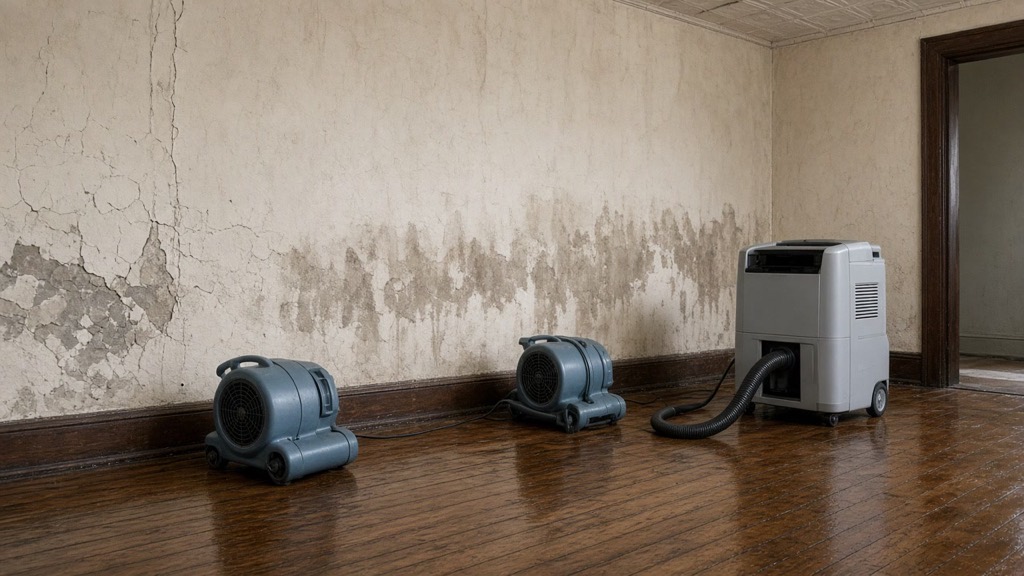
Water damage drying in the Bronx: the clock starts when the water stops
Whether a wet building ends as a repair bill or a mold project depends on how soon the materials dry, and a drying company has to be on its way before the damp settles in.
Signs this job fits a building in the Bronx
Water came up through a drain
The city's study of Ida records water pushing back up through basement plumbing fixtures as one way Bronx basements flooded.
Street or river water got in
Runoff from the street and overtopped rivers and streams were both recorded as sources of Bronx basement flooding in that storm.
It happened outside a flood zone
Only 1.3 percent of Bronx residents and homes are in the mapped floodplain, and most buildings Ida damaged sat outside the mapped floodplains, so a clear flood map is not a clear building.
The air feels heavy days later
A normal July dew point at LaGuardia stays above 60 degrees at every hour, so Bronx summer air will not do the drying for you.
Common questions
How fast does drying need to start?
The EPA's target is a day or two for wet materials. Past that point mold becomes more likely, and an assessor can tell you whether it has started.
I am not in a flood zone. Do I still need drying?
Possibly. Hurricane Ida damaged buildings well outside mapped floodplains, and a plumbing failure creates wet materials anywhere regardless of the map.
What if the water was sewage backing up through a drain?
Say so when you call, because it affects which company should handle the job and what has to be discarded. A drying company will tell you what it can and cannot take on.
Dry-Out in the Bronx
The EPA's guidance for wet building materials is to clean and dry them inside a day or two, a window of 24 to 48 hours. In the Bronx two local facts squeeze that window further.
First, the water may not announce itself as a flood. Only 1.3 percent of Bronx residents and homes sit inside the mapped one percent floodplain, yet Hurricane Ida damaged about 33,500 buildings citywide and only a small share of them stood in mapped floodplains. Water reached cellars and basements particularly in inland areas, and a burst riser or a failed roof drain can wet a fifth-floor hall just as well.
Second, the weather will not help. On the 1991 to 2020 normals the July dew point averages 63.1 degrees at the station nearest the Bronx and never drops below 60.3, so wet drywall and carpet lose moisture slowly without equipment. Document what was wet and when. If materials have stayed wet beyond two days, an assessor can tell you whether mold has taken hold.
Article 32's mold licenses start at mold work over ten square feet; repair done for other purposes sits outside that definition, but once growth passes that size a hired job needs a licensed assessor and a separate licensed remediator. Source: U.S. Environmental Protection Agency, The New Normal: Combatting Storm-Related Extreme Weather in New York City, City of New York, Community Development Block Grant Disaster Recovery, City of New York, New York City Emergency Management, New York City Hazard Mitigation Plan, NOAA National Centers for Environmental Information, New York State Senate