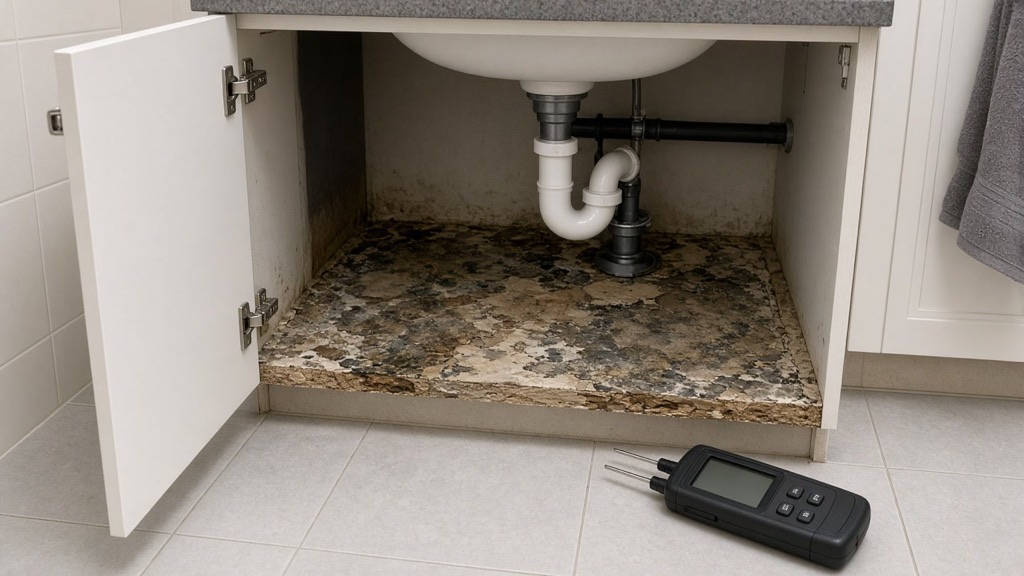
Drying out water damage in Mott Haven buildings
Water in a Mott Haven apartment may come from a pipe above or, near the river, from outside. Getting the structure dry is the step that stops mold from following.
Signs this job fits a building in Mott Haven
A burst or leaking line above you
In ZIP codes where over 90 percent of occupied homes are rented, water can pass between households.
Floors damp after a backup
Water can return up through basement plumbing fixtures during heavy rain.
Ground-floor or basement dampness near the river edge
FEMA returns Zone AE at a point on the Harlem River edge on the Mott Haven side.
Wallpaper lifting or paint blistering
Slow moisture inside a wall shows itself at the surface late.
Common questions
Do I need drying if my Mott Haven building is not in a flood zone?
Yes, if it got wet. Most of the city's Hurricane Ida damage was outside the mapped floodplain, and leaks cause wetness anywhere.
What is the target for drying wet materials?
A day or two, by the EPA's guidance, so mold has less to feed on.
Dry-Out in Mott Haven
Two kinds of water reach Mott Haven buildings. The first is the ordinary leak. In the Hunts Point and Mott Haven reporting area, 24.6 percent of homes reported leaks in 2017 and 22.7 percent reported cracks or holes. The second is storm water, and here the evidence is mixed: FEMA returns minimal hazard at the neighborhood's center but Zone AE, with a 13 foot base flood elevation, at a point on the Harlem River edge.
Claims show the risk is modest: ZIP code 10454 has seen 24 flood insurance claims, and 10455 only 9. The city's account of Hurricane Ida adds a caution, though. The review traced basement and cellar flooding to street runoff, to rivers and streams that overtopped (mostly in the Bronx) and to water rising back through basement plumbing fixtures, and most damaged buildings stood outside the mapped floodplain.
For whichever source, the drying advice is the same. Federal guidance sets the same short target for all of it: a day or two. After that the question becomes whether mold has formed, and a large area goes to a licensed assessor.
Article 32 licensing starts at mold work over ten square feet, so a large mold area found after drying goes to a licensed assessor and a separate licensed remediator for any hired job. Source: Environment and Health Data Portal, New York City Department of Health and Mental Hygiene, National Flood Hazard Layer, Federal Emergency Management Agency, OpenFEMA NFIP redacted claims, Federal Emergency Management Agency, The New Normal: Combatting Storm-Related Extreme Weather in New York City, City of New York, Community Development Block Grant Disaster Recovery, City of New York, U.S. Environmental Protection Agency, New York State Senate