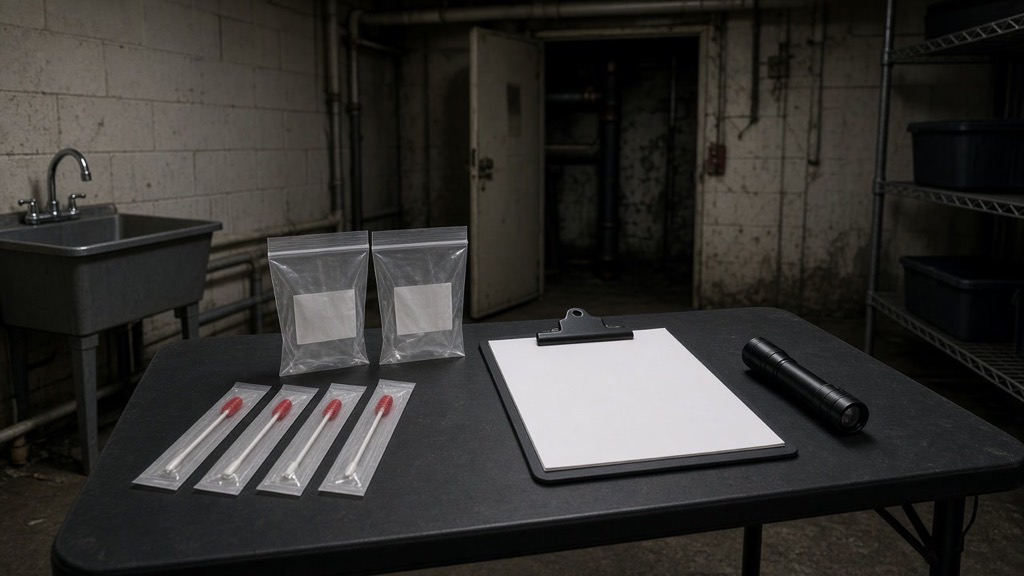
Find the source first: mold assessment in Mott Haven
In a large Mott Haven building, the wet patch you can see can be fed from somewhere you cannot. An independent assessor traces it and writes the plan.
Signs this job fits a building in Mott Haven
A stain in a newly emptied apartment
Apartments turn over between tenants, and in a building of three or more units the city expects a vacant apartment to be thoroughly cleaned and free of mold first, so a stain in an empty unit deserves a written look.
Cracks or holes next to a stain
22.7 percent of homes in the reporting area reported cracks or holes, an easy path for water.
A superintendent's patch that does not hold
Repeated wiping or painting means no one has located what keeps the wall wet.
A unit on the building's river side
Buildings near the Harlem River edge deserve a check on how water gets in, not just where it shows.
Common questions
How do I know a Mott Haven assessor is properly licensed?
The state labor department directs consumers to its Licensed Mold Contractors Search Tool and its individual license search. Check before you sign.
Is an assessment needed for a small patch?
State licensing applies to mold areas over ten square feet. A smaller patch can still point to a leak that needs finding.
Mold Survey in Mott Haven
Mott Haven's housing is mid-century at its center and mostly rented, so an assessment serves two readers: the person living there, and the owner who has to prove the fix worked. A written plan from an independent assessor is the document both can use.
The state wants that plan to list rooms, methods, protective equipment, how occupants are told, a cost and time estimate and, when possible, the underlying moisture sources. The moisture line matters most here, because the reporting area's numbers point at the building: 24.6 percent of homes reported leaks in 2017 and 22.7 percent cracks or holes, against 13.4 and 12.3 percent citywide.
Do not expect the assessment to rest on a lab result. The state health department says mold testing is not recommended and no standard exists for mold in homes. Ask instead what the assessor looked at, and what they say needs to change in the wall, pipe or roof so the cleanup holds.
A New York assessment license is separate from a remediation license, and the same company cannot hold both jobs on one property. Source: American Community Survey 2020 to 2024 5-year estimates, US Census Bureau, Environment and Health Data Portal, New York City Department of Health and Mental Hygiene, New York State Senate, publication 7287, New York State Department of Health, New York City Department of Housing Preservation and Development, New York State Department of Labor