Mold remediation in the Bronx, scaled to the building you own or live in
The remediation company works to the assessor's plan, and in larger buildings the city filings are part of the job, not an afterthought.
Signs this job fits a building in the Bronx
An assessor's plan is in hand
Remediation follows a written plan, so the right time to bring in the cleanup firm is after the assessment names the areas and the methods.
The building has ten or more apartments
For mold over ten square feet in a ten-apartment building, the city keeps the work away from the owner and the managing agent's own staff, so it goes to a state-licensed company.
Mold sits in a wall cavity
The city's rule counts mold inside wall cavities as a hazard, which rules out wiping the visible surface and calling it done.
A big building, a big footprint
More than a third of Bronx units are in buildings of 50 or more units, where containment and notification are part of the plan, not extras.
Common questions
Can my building's super do the cleanup?
Not for mold over ten square feet in a building of ten or more apartments, where the city law keeps the owner, the agent and building staff out of the work. Elsewhere the state's owner exemption may apply, depending on the property.
Does the cleanup firm file anything with the city?
On a covered building, yes: the firm sends the city a notice with the work plan attached at least two business days before work begins, and the assessor files a post-work assessment afterwards.
What does the cleanup actually involve?
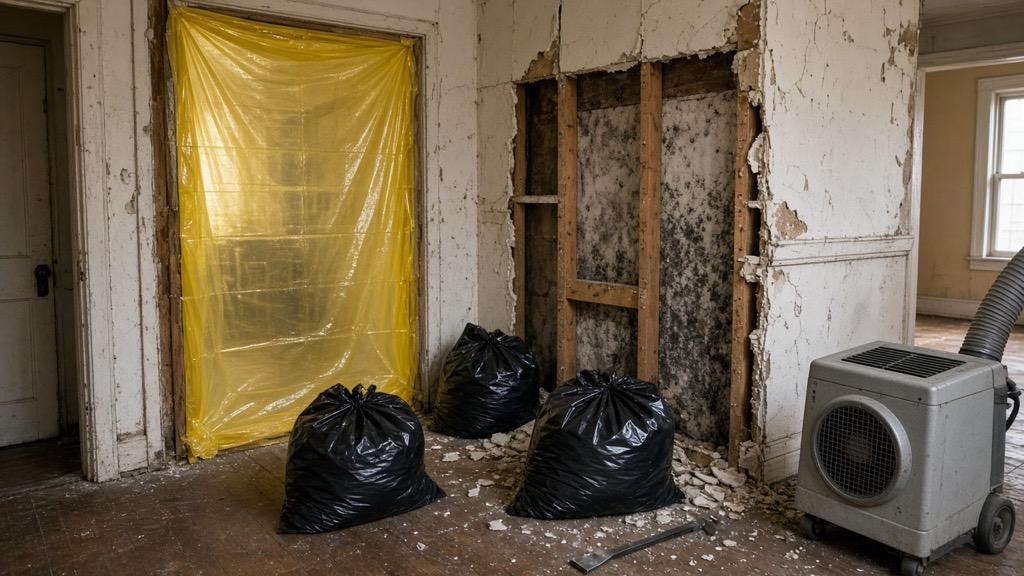
The plan sets it out. The city's practices for owners of larger buildings isolate the work area with plastic sheeting, use HEPA-shrouded tools, clean with soap or detergent and water, and discard what cannot be cleaned. The assessor's clearance comes last.
Mold Cleanup in the Bronx
The size of the Bronx's buildings shapes how remediation is run. About 71.5 percent of units are in buildings of five or more apartments and 35.7 percent are in buildings of 50 or more, so occupied apartments can sit above, below and beside the work area. Where the building is occupied, the plan has to say how residents are told and how the work area is kept apart from them.
Which paperwork applies depends on size. On a building with ten or more dwelling units, a mold area over ten square feet brings a notice to the city from the remediation firm, work plan attached, at least two business days before work begins, and a post-work assessment from the assessor inside a week of finishing. The owner cannot take that job over personally.
The city's rule for owners of buildings with three or more apartments also spells out how the work is done: plastic sheeting around the area, HEPA-shrouded tools, soap or detergent and water, and disposal of what cannot be cleaned. Whatever the building's size, the cleanup only holds if the leak behind it is repaired, which is why the plan comes first.
In a building with ten or more apartments, Administrative Code section 24-154 keeps the owner and managing agent out of mold jobs over ten square feet and sends them to an Article 32 licensee. Source: American Community Survey 2020 to 2024 5-year estimates, US Census Bureau, Local Law 61 of 2018, The City of New York, Rules of the City of New York title 28 chapter 54, New York City Department of Housing Preservation and Development, New York State Senate