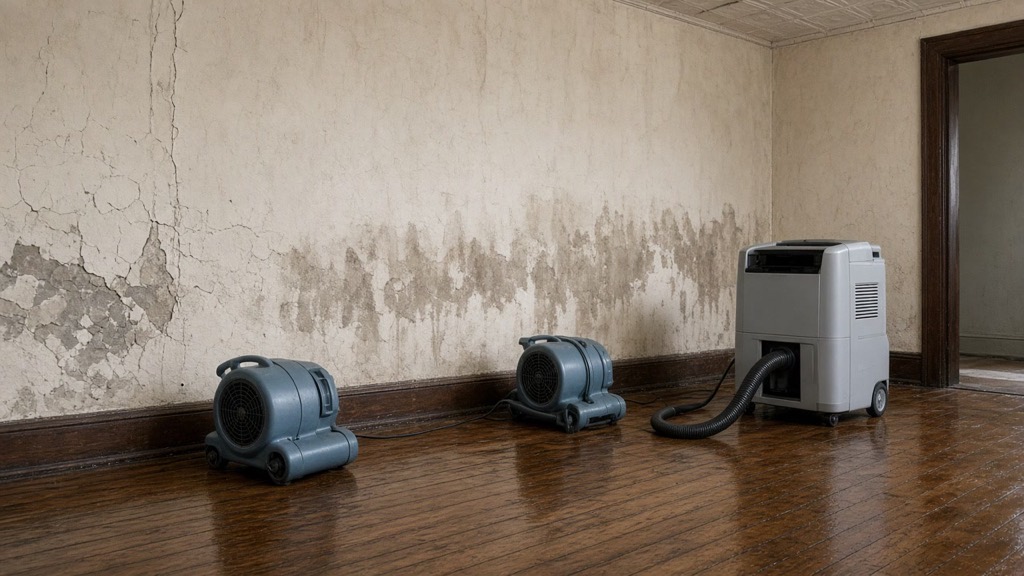
Water damage drying in Yonkers, before damp becomes mold
A burst pipe, a backed-up drain or a river-fed basement leaves Yonkers walls wet long after the water stops. The EPA puts the drying window at 24 to 48 hours, and the drying company does that work.
Signs this job fits a building in Yonkers
Water from a river valley storm
The Nepperhan, Bronx River and Tibbetts Brook areas are all on the city's own flood prone list.
A supply leak from the apartment above
In a building with several apartments the water can travel into the ceiling, the wall cavity and the unit beside it.
Carpet or plaster still cool days after the repair
A fixed pipe does not mean a dry wall; surfaces that stay cold and damp need drying equipment, not time.
A basement that has flooded before
Yonkers has 239 repetitive loss properties on record, addresses that have flooded more than once.
Common questions
How soon should a Yonkers basement be dried after a flood?
The EPA's guidance is 24 to 48 hours for damp materials and furnishings. Call or send the form as soon as the water is out.
Will a flooded Yonkers unit need a mold assessor as well?
Not automatically. If growth appears and covers more than ten square feet, yes. Until then, drying and photographing the affected rooms keeps every option open.
Dry-Out in Yonkers
Yonkers keeps a list of flood damaged properties and has told the county which areas it treats as flood prone: the Nepperhan River Valley, the Hudson, the Bronx River Valley, Tibbetts Brook, and Clunie, Nepperhan and Harrison Avenues. Its 239 repetitive loss properties describe addresses that have flooded more than once.
The EPA's window for drying damp building materials and furnishings is 24 to 48 hours, which is why a drying company belongs at the start of a water job and not after the mold appears. In an apartment house, ask for moisture readings in the neighboring surfaces too, not only the visible stain.
Tibbetts Brook is the odd local detail. New York City says it once ran from Yonkers through the Bronx to the Harlem River and was buried in the sewer system by 1912, and that a contract to bring it back above ground is expected to start in Fall 2026. That is a New York City project on the Bronx side, so a wet ground-floor unit in Yonkers today still needs drying and dated photographs now.
On a hired job where opened walls show more than ten square feet of mold, Article 32 calls for an assessor who holds the state license and a separate remediation company, unless a section 933 exemption such as an owner's own home applies. Source: City of Yonkers annex, Westchester County Hazard Mitigation Plan, New York City Department of Environmental Protection, U.S. Environmental Protection Agency, New York State Senate