Water damage drying in Mount Vernon, before the walls stay wet
Water in a Mount Vernon cellar or apartment starts a clock the moment it arrives. A drying company works on the materials while they can still be saved, and we help you reach one.
Signs this job fits a building in Mount Vernon
Sewer water in a cellar or ground floor
Residents have named overflow at several Fulton Avenue intersections, Columbus Avenue and Third Avenue.
Storm flooding on a street no map flagged
The city itself says Hurricane Ida flooded places outside its mapped zones.
A pipe leak above that soaked a ceiling
The wall below and the unit beside it may be wet even where nothing shows.
Carpet or underlay down for days
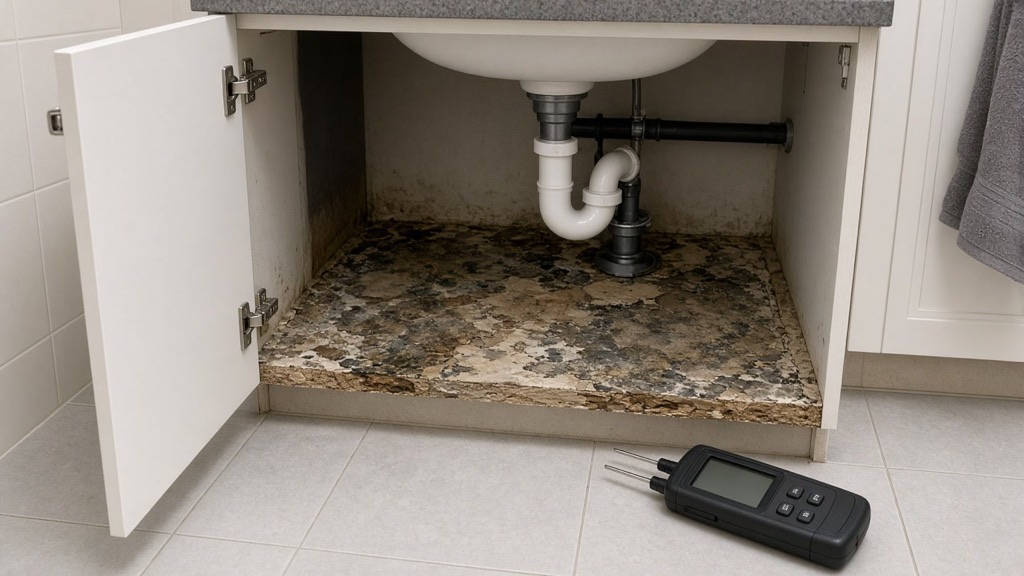
Soaked flooring that stays in place is where a water job becomes a mold job.
Common questions
Does Mount Vernon keep a record of flooded homes I can cite?
The city told the county plan it keeps no list of flood damaged properties, so your own dated photographs and invoices are the record.
What is the drying window after sewer water?
The EPA's figure for damp building materials is 24 to 48 hours. Contact us once the water has been stopped, and say plainly that it was sewer water.
Dry-Out in Mount Vernon
The city told the county that its flood maps do not capture the real risk, and that it keeps no list of properties that flooded. For you that means the record of what happened has to be your own: dated photographs of the water line, receipts, and the moisture readings the drying company takes.
Residents reported flooding and overflowing sewers along Fulton Avenue, where it crosses 5th Street, Langdon Avenue, Prospect Avenue and Sandford Boulevard, plus Columbus Avenue, Third Avenue and the Hutchinson River Parkway. The city's sewer bureau looks after hundreds of miles of sewer line and over 3,000 catch basins, a large system for a compact city.
Whatever the source, the EPA's window for damp building materials is 24 to 48 hours. Tell the drying company whether you had clean water from a pipe or sewer water, since they are different problems. Under a Westchester County law, prospective tenants must receive a Flood History Disclosure Form covering the past ten years, so a documented event matters for your next lease too.
If wet walls turn out to hold more than ten square feet of mold and you hire the work, the state's licensing law requires two separate companies, one to assess and one to remediate; section 933 exempts an owner working on their own home. Source: City of Mount Vernon annex, Westchester County Hazard Mitigation Plan, U.S. Environmental Protection Agency, Westchester County Department of Planning, New York State Senate