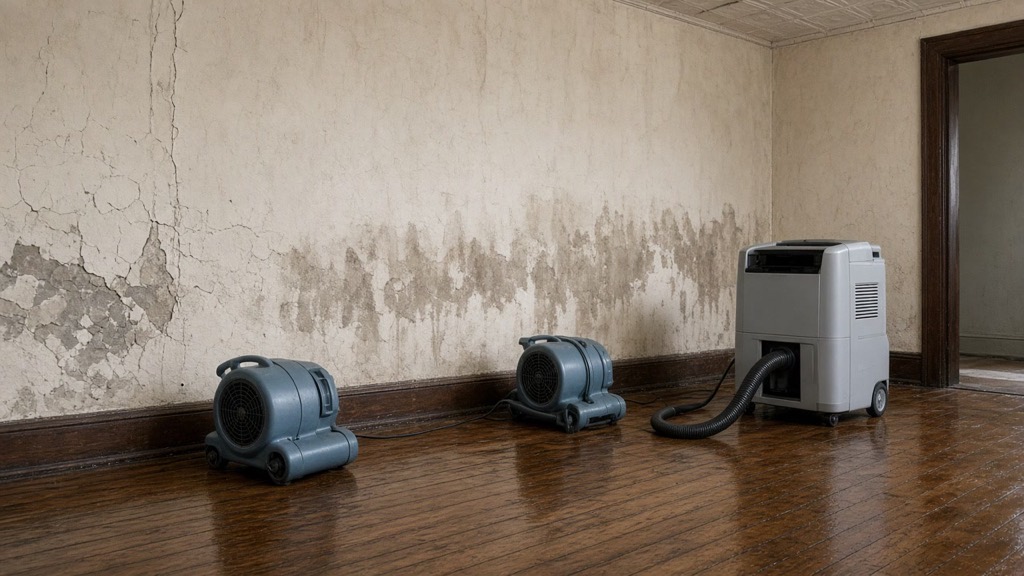
Water damage drying in the Village of Pelham, start while it is wet
Whether the water came off the Hutchinson River or out of a pipe, a Pelham house stays at risk until its walls and floors read dry. We help you reach a drying company.
Signs this job fits a building in Pelham
Flooding near 3rd Street or the Hutchinson River
The village records streets and homes there flooding and staying flooded for days.
Water under the Lincoln Avenue overpass area
The village states that area floods, so cellars and ground floors nearby are worth checking.
A cellar wetted in a storm and never dried
Hours of pumping do not make a stone or block wall dry.
A pipe or roof leak that soaked a wall
Interior surfaces stay damp behind paint long after the drip stops.
Common questions
Are the Pelham drainage fixes finished?
The village describes a proposed relief outfall on 3rd Street and a village wide plan for two drainage channels. Treat them as plans, and dry accordingly after any storm.
What should I record after water gets into a Pelham cellar?
Dated photographs of the water line, any repair invoices and the drying company's readings. A county rule on flood history disclosure for tenants makes that record useful later.
Dry-Out in Pelham
The village annex to the county flood plan calls the existing 12 inch drain on 3rd Street, running from the Hutchinson River to 4th Avenue, inadequate and proposes a 72 inch relief outfall. Streets and homes there flooded and stayed flooded for days. Separately, the village says its engineers spent 18 months on a village wide flood mitigation plan for two drainage channels: the North Pelham arterial line from Glenwood Lake to the post office and the Highbrook line serving Pelhamwood and Pelham Heights. Both are proposals, so until they are built, storm water can still reach low houses.
The county records 66 flood insurance policies in the village, 58 claims and 5 repetitive loss properties on data current to July 2021. Behind each number sits a real cellar or ground floor.
The EPA's window for damp building materials and furnishings is 24 to 48 hours, in order to stop mold taking hold. A drying company reading moisture in walls and floors, not only the carpet, is how you learn whether that has been achieved. Keep dated photographs of the water line, since a flood history can matter at a later sale or lease.
If drying uncovers growth across more than ten square feet and you hire the work, the state's mold licensing law brings in an independent assessor and a separate remediation firm, though an owner working on their own home falls under a section 933 exemption. Source: Village of Pelham annex, Westchester County Hazard Mitigation Plan, Village of Pelham, Westchester County Department of Planning, U.S. Environmental Protection Agency, New York State Senate