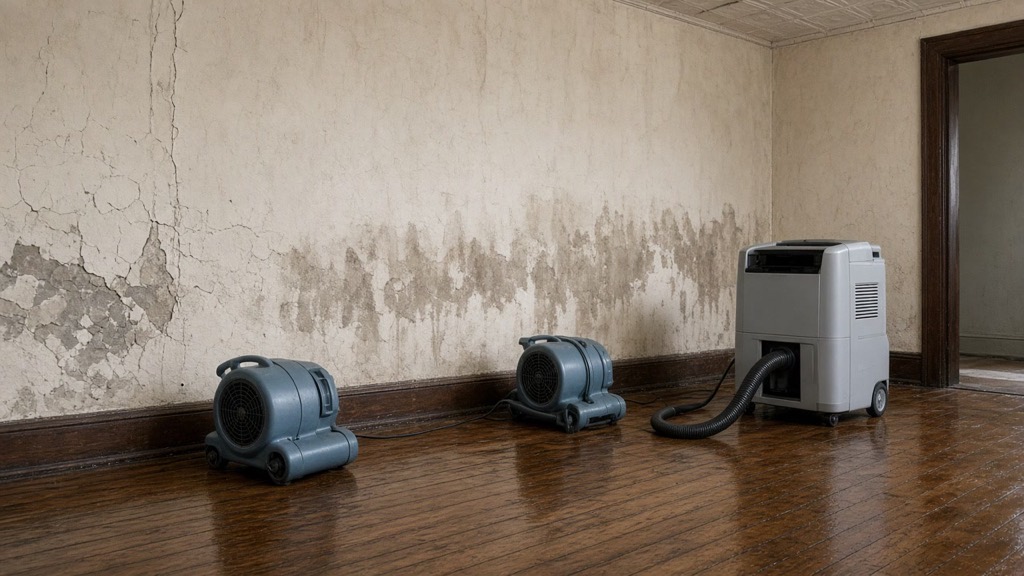
Pelham Bay water damage drying: shoreline storms and ordinary leaks
Whether bay water, rain or a broken pipe did it, wet materials need drying equipment before the building settles into damp.
Signs this job fits a building in Pelham Bay
Storm tide or heavy rain reached the lowest floor
The Eastchester Bay edge carries a coastal designation with a 17 foot base flood elevation, so surge is a recognized possibility.
Rain alone pooled around the building
New York City's stormwater maps model rain at 2.13 and 3.66 inches per hour to show where rain alone can flood property.
A leaking appliance in a rented unit
With seven in ten occupied units rented in ZIP 10461, a tenant notifying the landlord is the usual first step.
Wet insulation or carpet after two days
The EPA's advised window to clean and dry wet materials is 24 to 48 hours.
Common questions
Is bay flooding the main risk here?
It is a real exposure on the shoreline, but the neighborhood's claim history is small, so check for ordinary leaks and drainage problems too.
What should I photograph before the drying company arrives?
Photograph the affected rooms, the source if you can see it, and any waterline, so the company and later an assessor can see how far the wet went.
Dry-Out in Pelham Bay
Pelham Bay is a place where owners are tempted to explain every wet floor with the bay. The FEMA layer does show Zone VE at the shoreline, and Pelham Bay Park has a 13 mile saltwater edge on Long Island Sound. But only 33 flood insurance claims have been filed in ZIP 10461, so a damp lower level can just as well come from a failed fitting or a gutter that dumps next to the foundation.
Either way, the timetable is the same. The EPA's guidance for wet materials is a day or two, so the first call goes to a drying company, and the second call, if anything stays damp, to an assessor. The city publishes stormwater flood maps that model both moderate and extreme rainfall, and it is worth checking your block on them if rain keeps finding its way in.
For a rented unit, the tenant's first move is to tell the landlord. For an owner, record what was wet and what the water looked like, because a drying company needs to know if it was clean supply water, rain or something from a drain.
Article 32 leaves repair done for purposes other than mold remediation outside its licenses, but once the damp becomes mold over ten square feet, a hired job needs a separate assessor and remediator. Source: National Flood Hazard Layer, Federal Emergency Management Agency, New York City Department of Parks and Recreation, OpenFEMA NFIP redacted claims, Federal Emergency Management Agency, New York City Department of Environmental Protection via data.gov, U.S. Environmental Protection Agency, New York City Department of Housing Preservation and Development, New York State Senate