Mold remediation in Throgs Neck houses, done to the plan
The remediation company carries out the assessor's plan in your house, and the assessor comes back to confirm the work passed.
Signs this job fits a building in Throgs Neck
The assessor's plan is written and covers more than ten square feet
Past that size the work is a mold project in the state's terms and needs licensed companies if you are hiring.
A finished basement that flooded
Soaked drywall, carpet and trim that cannot be cleaned properly are candidates for disposal rather than cleaning.
You are the owner and want to do the small job yourself
For a patch smaller than about three feet by three, the EPA sees a homeowner job in most cases, and a resident owner's own work on their own home sits outside the state license rules.
A landlord's two-family house with an asthmatic tenant
The city's duty reaches the building regardless of size and calls for the repair of the underlying water leak.
Common questions
Does the exemption mean I can hire anyone to clean?
No. It covers a residential owner doing the work on their own property. A company you pay to do mold work needs the state license.
What if my flooded basement carpet is moldy?
Anything soaked beyond saving is thrown out, and the assessor's plan estimates how much material that is. Cleaning detergent alone will not rescue sodden drywall.
Mold Cleanup in Throgs Neck
With 73.2 percent of Throgs Neck units in one or two unit buildings, a remediation here is likely to be in a single house, such as a finished basement or a first floor. That keeps the legal picture simple. Under section 933 a resident owner's own work on their own property sits outside the license requirement, but the moment you hire anyone, the firm must hold the state mold remediation license, and it cannot be the company that did your assessment.
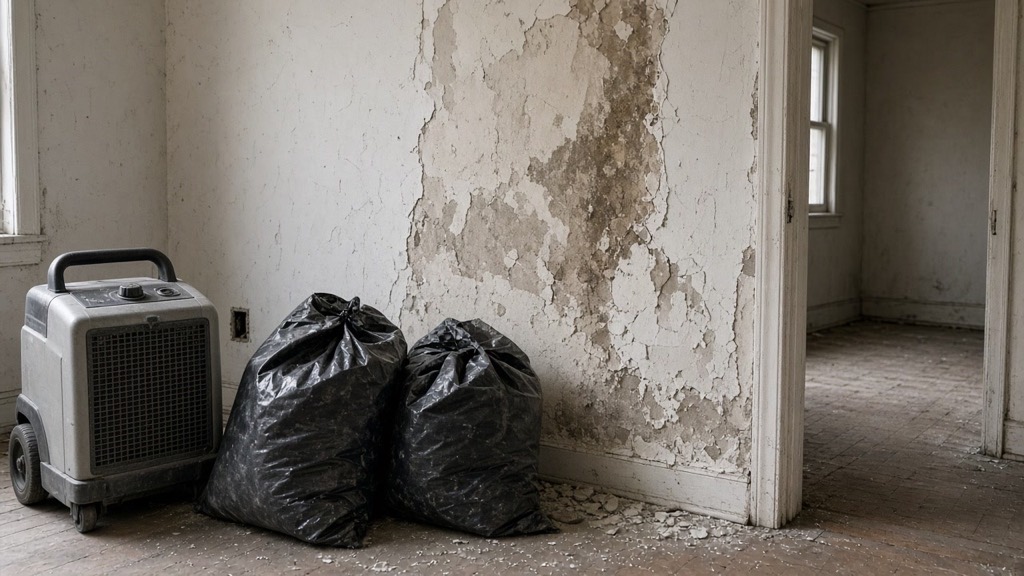
What a house job looks like is set by the plan, and the city's practices for larger landlords give a good picture of the method: plastic sheeting to isolate the work area, HEPA-shrouded tools, cleaning with detergent and water, and disposal of what cannot be cleaned. After a coastal flood, disposal can be a large part of the job.
The last step is the one owners skip. The assessor returns for a post-remediation assessment and writes a passed clearance report if the work was successful. Keep that report with the house records, along with the water source repair. Only about 13 percent of units locally are in buildings of ten or more apartments, but if yours is one of them, a mold area over ten square feet brings the city filings and rules out doing the work yourself.
A resident owner may work on their own residential property under Labor Law section 933, but hired remediation must be done by a licensed firm to the assessor's plan. Source: American Community Survey 2020 to 2024 5-year estimates, US Census Bureau, New York State Senate, Rules of the City of New York title 28 chapter 54, New York City Department of Housing Preservation and Development, U.S. Environmental Protection Agency, New York City Department of Health and Mental Hygiene, Local Law 61 of 2018, The City of New York